

Edge Tomorrow: A Four-Week Creative Residency for Families
How adults and kids practiced agency, resilience, and systems thinking inside a popup village.
July 21, 2026
Follow Edge City and Edge Tomorrow X | Instagram. And apply to join us for our next popup city in Goa, India (Oct 11–Nov 1, 2026).
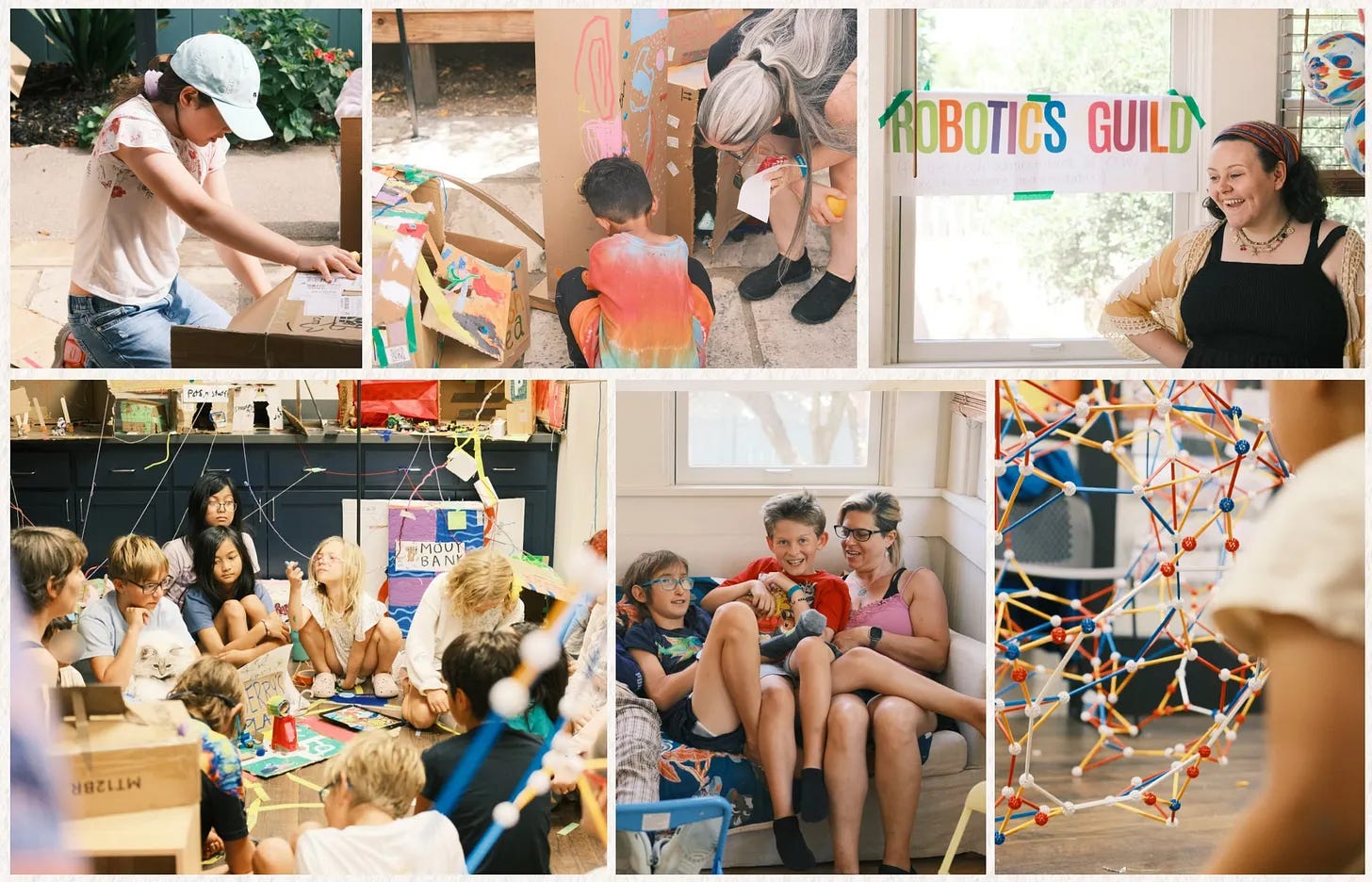
For the past three years, 500+ founders, artists, and researchers have gathered in Healdsburg, California at Edge Esmeralda, our month-long popup village. In 2026, we opened up a village within that village.
Edge Tomorrow was our first intergenerational creative residency, where 32 kids from 22 families spent up to four weeks as full citizens of Edge Esmeralda. While their parents prototyped the future, the kids built their own: a cardboard metropolis of 66+ structures, three kid-led businesses, an escape room the adults played, and two giant mathematical sculptures out of 11,000 Zometool pieces to name a few.
This is the story we couldn’t wait to share. Here’s what came of four weeks in the City of Cardboard Whatever.
What happened
Over four weeks, Edge Tomorrow ran on its own weekly rhythm: Monday for discovery, Tuesday for experiments and project definition, Wednesday and Thursday for building, Friday for a village-wide showcase. Kids led the projects, and adults joined as collaborators.
Edge Tomorrow by the numbers
The residency:
- 4-week residency
- 32 kids, ages 4–13, from 22 families
- 15 kids per day at peak
- 1 lead, 1 project facilitator, 4 volunteer facilitator-collaborators
- 6 activity-specific collaborators (vibecoding, 3D printing, yoga, sound baths, math art)
The build:
- Over 1,000 sq ft of cardboard transformed
- 1,815 feet of painter’s tape, 638 feet of string, 264 feet of fairy lights
- 11,000 Zometool pieces across two giant sculptures
What came out of it:
- 66+ structures, including 20 cardboard Trader Joe’s and 6 celestial objects
- 3 kid-led businesses, 1 kid-crafted escape room, 3 kid-hosted birthday parties
- 2 snails temporarily adopted
What we learned in summary
- Weird ideas can become real at the speed of thought. Every kid idea got a “yes, go,” whether that was starting a village currency or building 20 cardboard Trader Joe’s.
- When kids care about their work, they lean into hard things. Walls fell down, sculptures broke, the city was displaced by a windstorm. Every setback became a chance to practice care.
- Individual creativity connects to what the collective needs. Kids reframed the question from “what should I make?” to “what does the city need?”
- The adults who thrived let go of their own agenda. They shelved jam-making, drones, and other prepared activities to follow the kids.
Each point explored in full in “Why this matters.”
“I think humans evolved to be around our kids. Modern life has just taken that away from us. We wake up, we take our kids to school...I just think that’s not how we’re meant to be! It’s really been a profound experience, for me to have that holistic mix of community, work, and my kids, all being around together. I’m going to have a hard time figuring out how to integrate that into day to day life. I’m very grateful for you guys showing us the way and what I can feel like.”
- Antony Evans, father of Phoenix, 4
What we set out to do
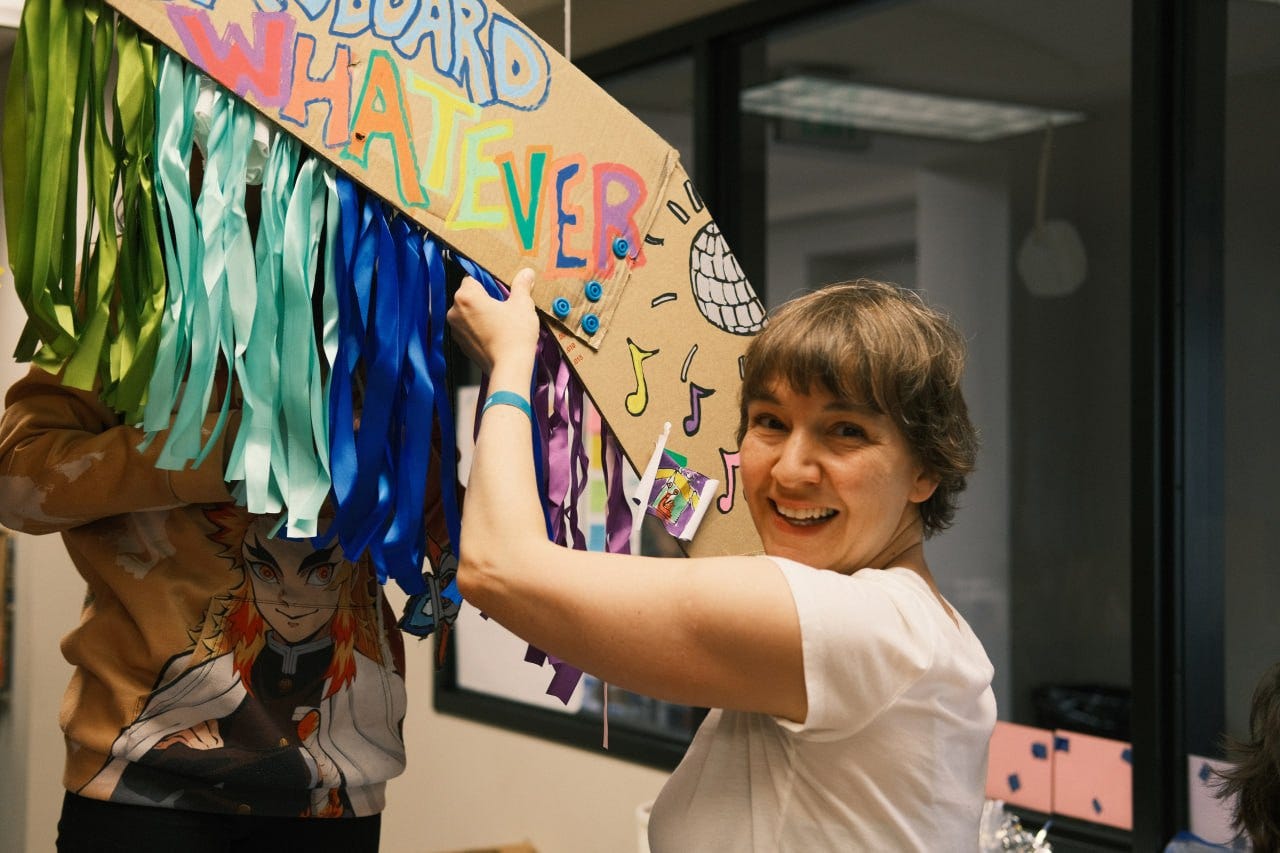
With Mitra Martin leading the program, we set out to build an intergenerational layer for Edge Esmeralda: a place where kids would run their own residency as full citizens of the village, and parents could fully immerse in the popup knowing their kids were doing the same.
“We wanted to create a container where young people’s ideas are taken seriously, where they could participate in and co-create the life of the village in developmentally appropriate ways.” — Mitra Martin
The design draws on Reggio Emilia’s project-centered pedagogy, Montessori’s autonomy-first environment, and Francesco Tonucci’s City of Children, the model of towns designed by and for children. It also takes its governance cues from child-led models like Children’s Parliaments and sociocracy for kids. From that lineage, we shaped Edge Tomorrow: a multi-age month-long residency for kids aged 4 to 13, where each day mixes structured collaboration and open play.
Kids join Edge Esmeralda as fellow citizens, stakeholders, and builders. They lead the research, define the projects, and shape the culture of the village alongside adults there to collaborate and learn with them.
The goal: to give the kids who will become tomorrow’s leaders, healers, and artists a chance to feel what it means to imagine, collaborate, and bring something real to life.
“With my two daughters here attending Edge Tomorrow, the amount of burden I feel is gone, there is a lightness in my shoulders. It almost feels like we’re bringing forward the past of how we used to function as a society. We were all raised in villages, we didn’t have to shoulder all the burden by ourselves as a small nuclear family, it’s wonderful to witness and experience this here.”
- Jeremy dela Rosa, co-founder of Agartha and father of Bev 13 and Maddy 11
What surprised us
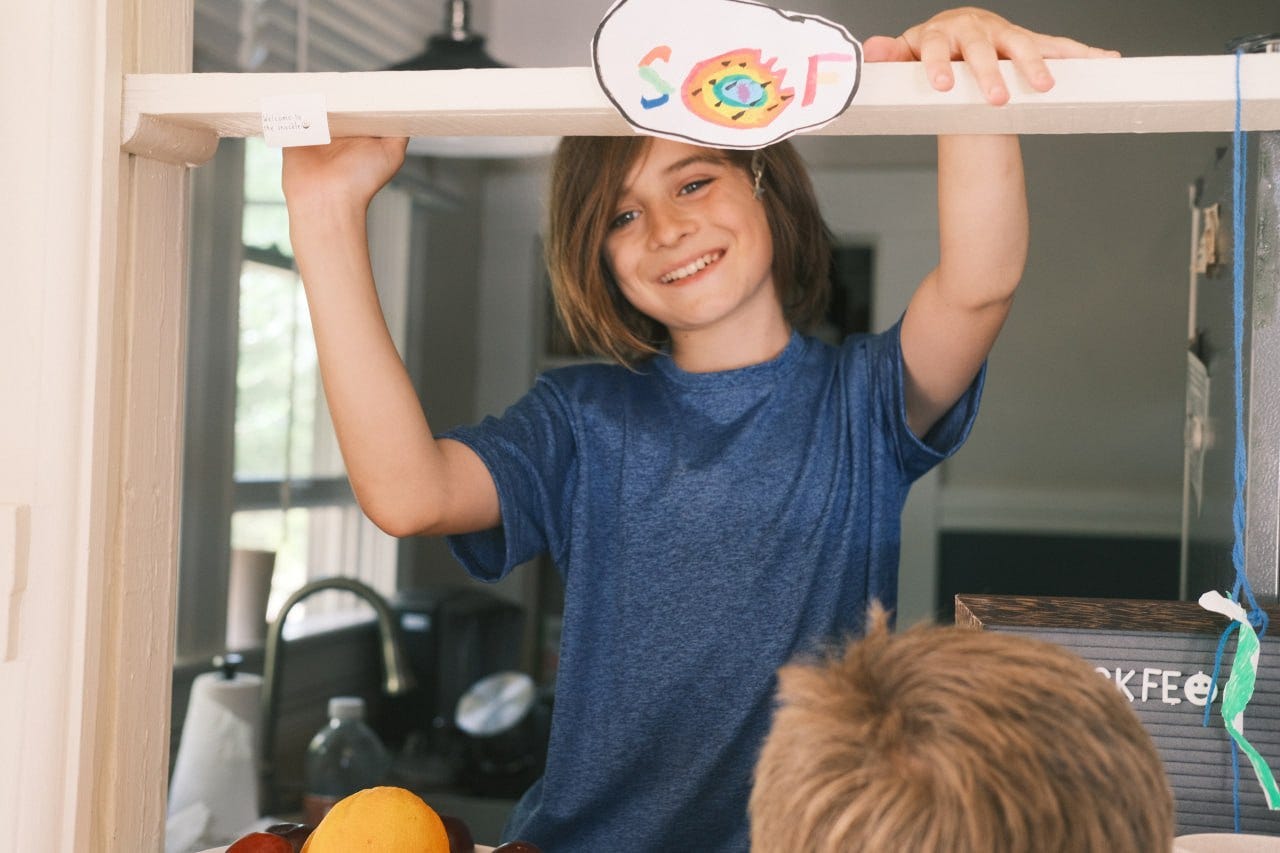
Insanely prolific, joyous, and offbeat
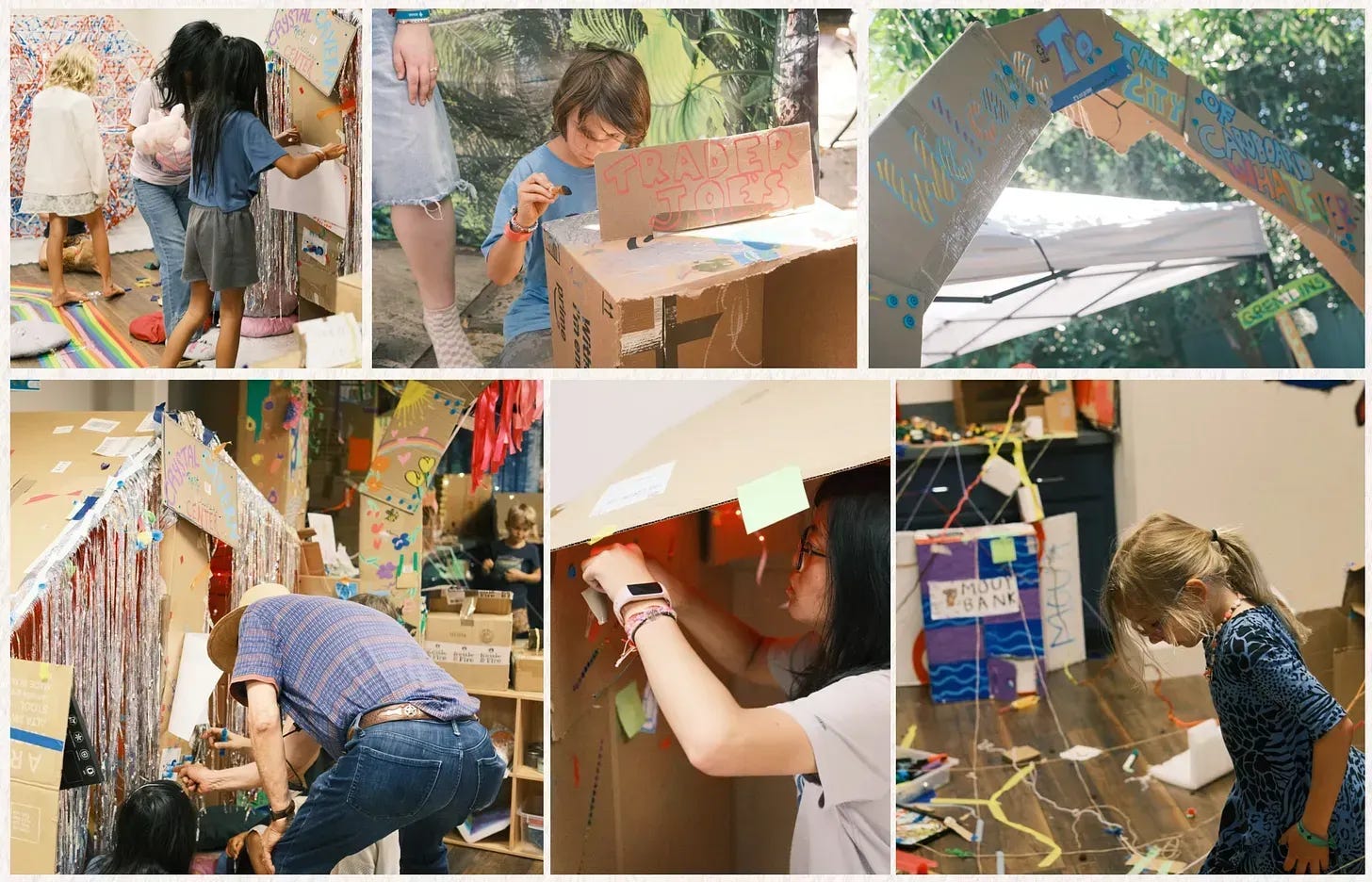
The cardboard metropolis the kids built, which they called the City of Cardboard Whatever, was an utterly alive place. The intensity of the work the kids were doing, the purity of their creative spirit, and the novelty and weirdness of its contents made it magnetic and remarkable. We had no idea whether kids would authentically engage with the proposal to build a city, especially when just given a bunch of cardboard boxes, but they did, fully.
The city grew explosively over four weeks. As density grew, the residents added a zipline system, planned at least 20 cardboard Trader Joe’s, and welcomed their first mayor (Jerry, a snail). They developed the CCW flag around four principles: weirdness, respect, calmness, and creativity. A rich and complex lore emerged. As a whole, their work suggests meaningful patterns for child-inclusive cities, as Mitra explores here.
David Whitehill, an architect and Edge Esmeralda participant, worked with Mitra to activate the city-building project. He captured what made it work: “The number one thing that we kept in mind was to take kids seriously. The ideas that came out of this group were so diverse and exciting.” He adds:
“This is really how cities are built. A city is an emergent phenomenon, of a lot of people wanting to do things individually, having passion and permission. And the way that all comes together, including the randomness, is how the beauty of the city comes about.” - David Whitehill, architect
David also joined a different Edge Esmeralda program: the AI film hackathon led by Minh Do at Machine Cinema.
Out of that came a short film about the City of Cardboard Whatever.
This is exactly the kind of creative product that takes shape when ages aren’t segregated and different layers of the village are in conversation with each other.
Honored agreements about our culture
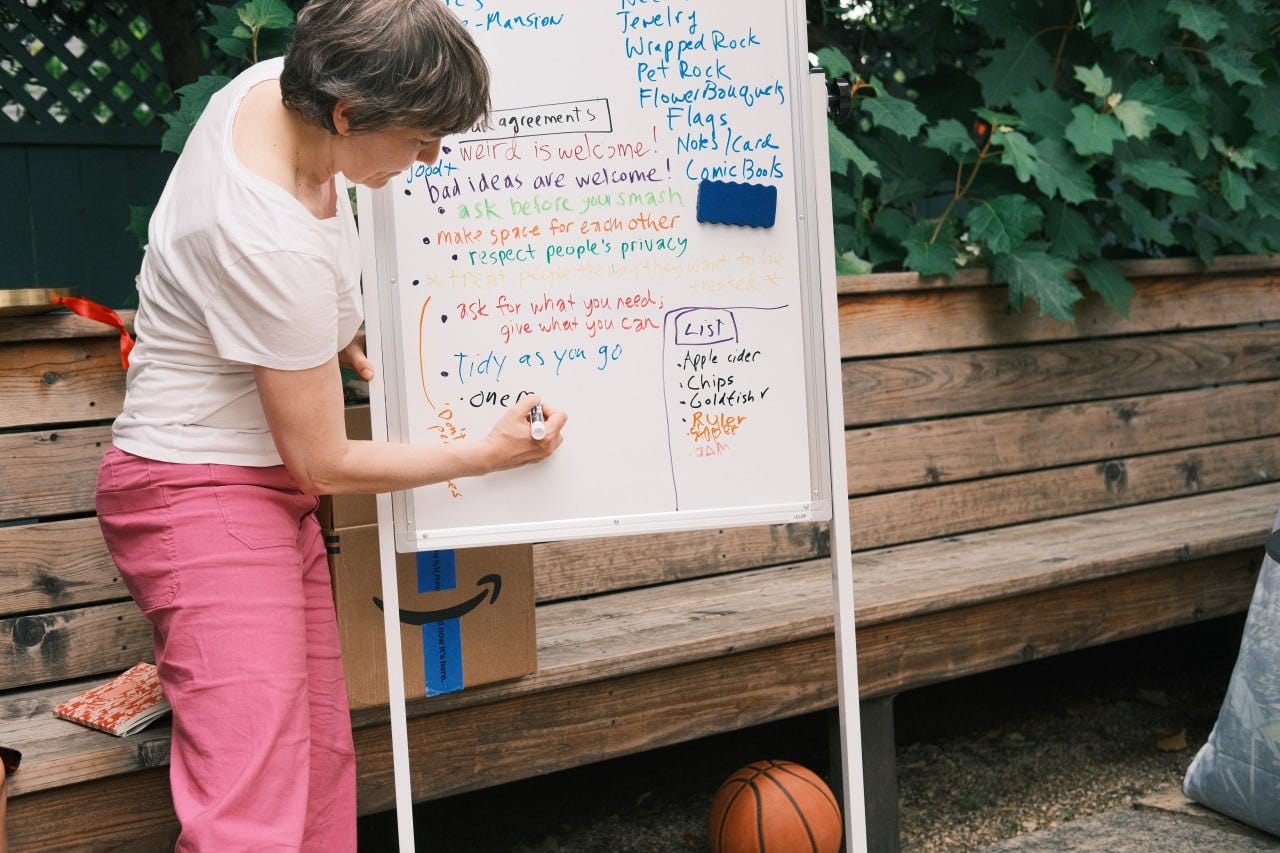
The agreements about how to treat each other, which we formulated as a group each week, had a special potency. Everyone took the agreements seriously, especially when we re-invoked them daily and refined them as the week went on. When someone acted out, facilitators explained that they had broken an agreement they themself had just made, and they were eager to correct.
They built really hard things and stuck to it
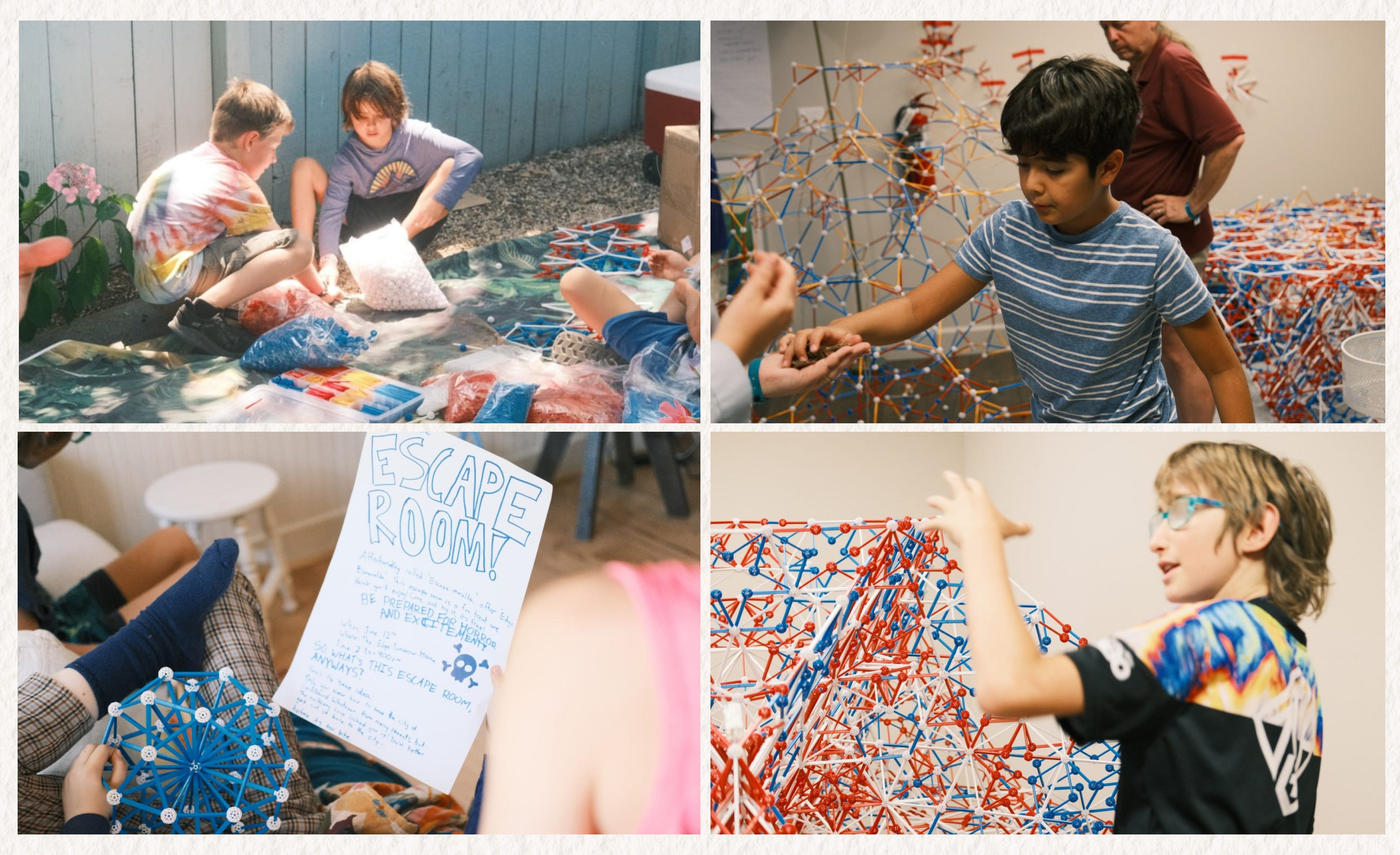
Many of the kids’ initiatives were big, and hard, and even in this supportive environment, they faced real pushback from the “real world.” Prospective customers dismissed them when they offered baked goods for sale. The site-specific escape room had to be rebuilt from scratch in a new place in less than two hours. The gigantic mathematical structure broke in a dozen places when we added a heavy new section.
The amount of sheer stick-to-it-iveness was amazing.
Each age group contributed its unique wisdom
Our seven to twelve year olds brought so much worldbuilding energy: they worked so hard making structures and making meaning through an intricate lore. Our teenagers brought leadership, and perspective, and an attitude of real caring toward the younger ones. Our four-to six-year-olds brought catalytic inspiration of play, and our four-year-old resident often made the wisest and most transformative observations. Adults brought skill and steadiness, grace and flexibility.
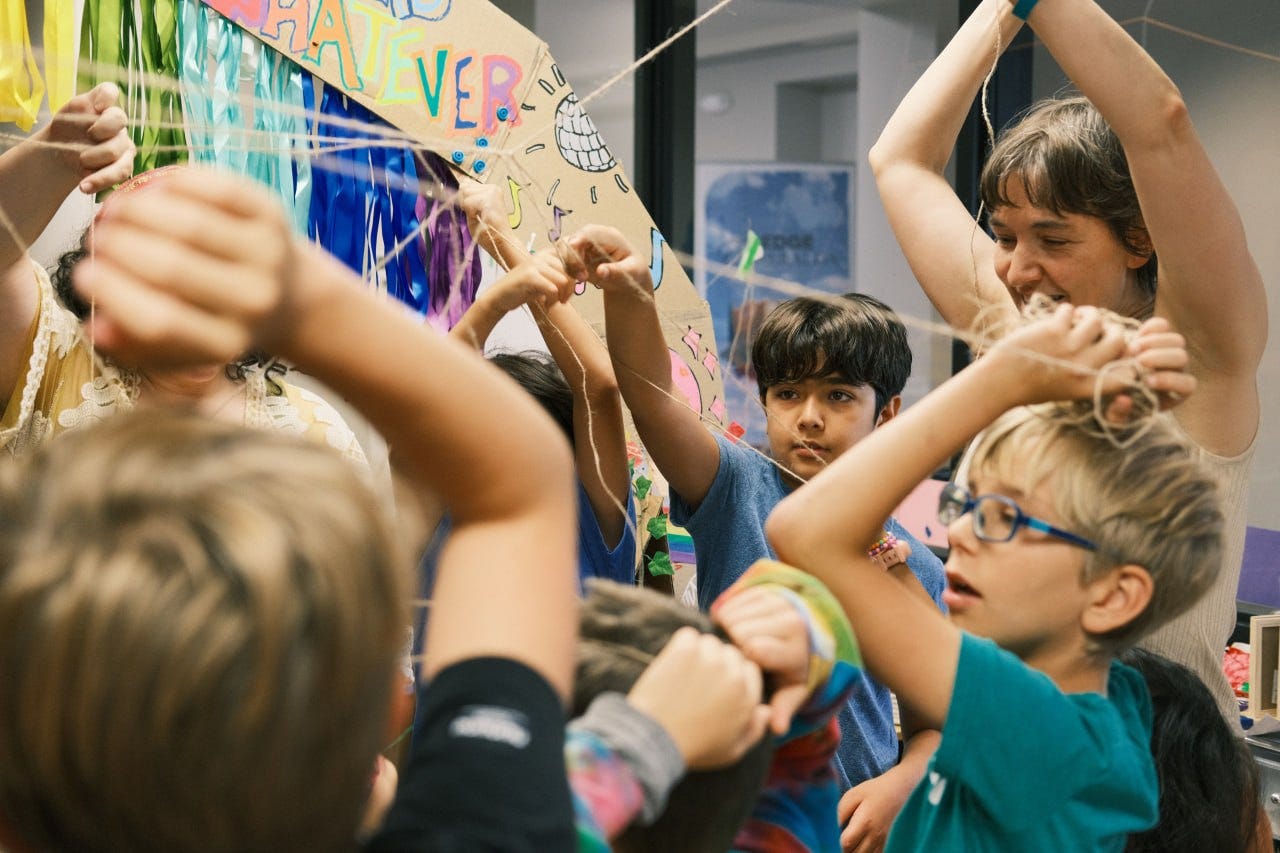
“Aside from just the awesome program and the way the space was held, what made it so special for us was the integration within the larger community here. There's just nowhere to get that, as far as I know. We've tried lots of different approaches to education, but this embeddedness with really amazing people of all ages, who are doing really creative things in their lives, and the way the kids were embraced by the community, really amazing. I don’t know any other place where that’s happening.” - Jon Shinn, father of Leo, 8, and Trey, 13
Coherence trumps entertainment
Enabling kids to create something that keeps growing and evolving over the course of a whole week, let alone a month, is a huge and unusual gift. It allowed for a unique form of emergent coherence to take hold and deepen. They never had to put their cardboard city away, it just kept growing in the space and in their imagination. This gave it a certain gravitational pull and meaning that went deeper than the one-off activities, like movement and crafts that usually organizes childrens’ programming.
Why this matters
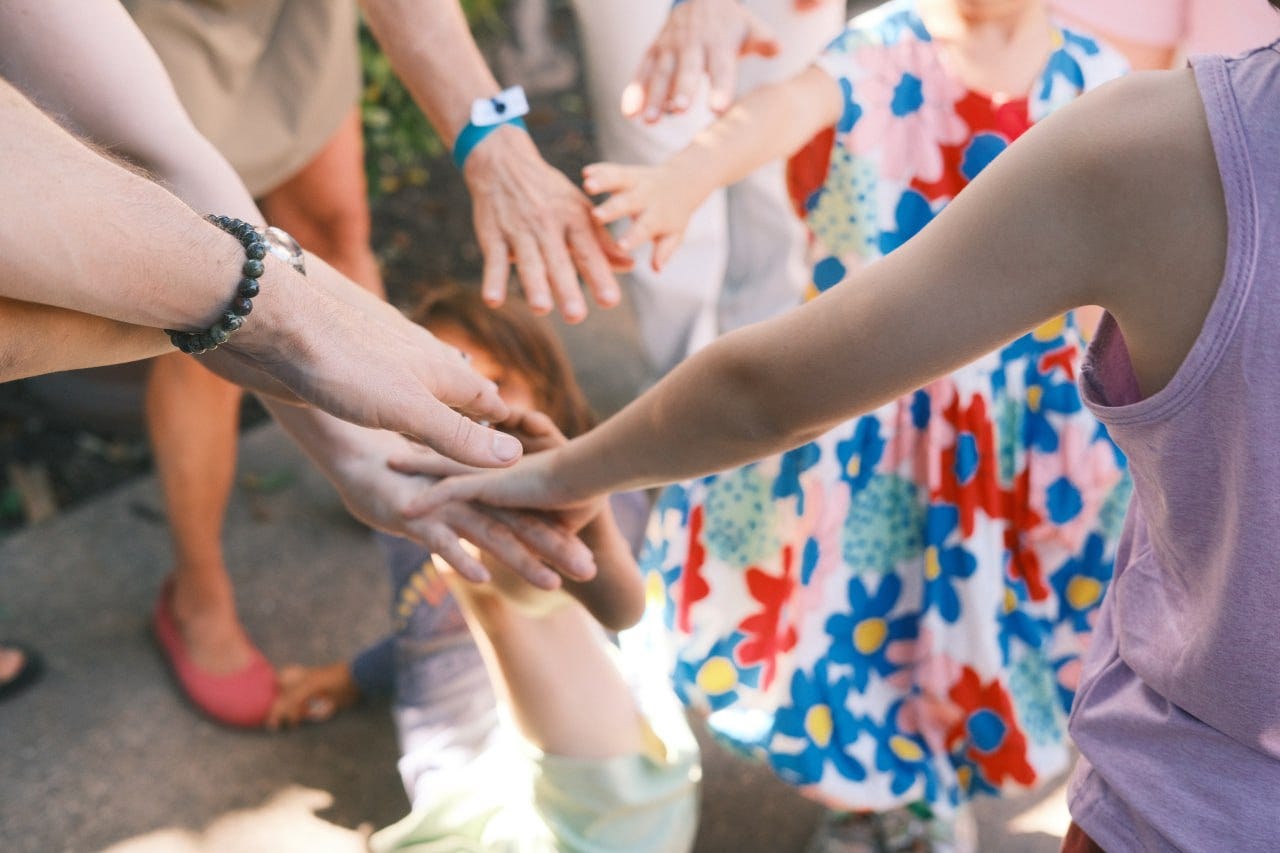
The kids in this container practiced embodying a form of leadership that the world sorely needs, and the adults practiced a unique and generous form of followership.
Unusual agency: Go ahead and make your weird idea
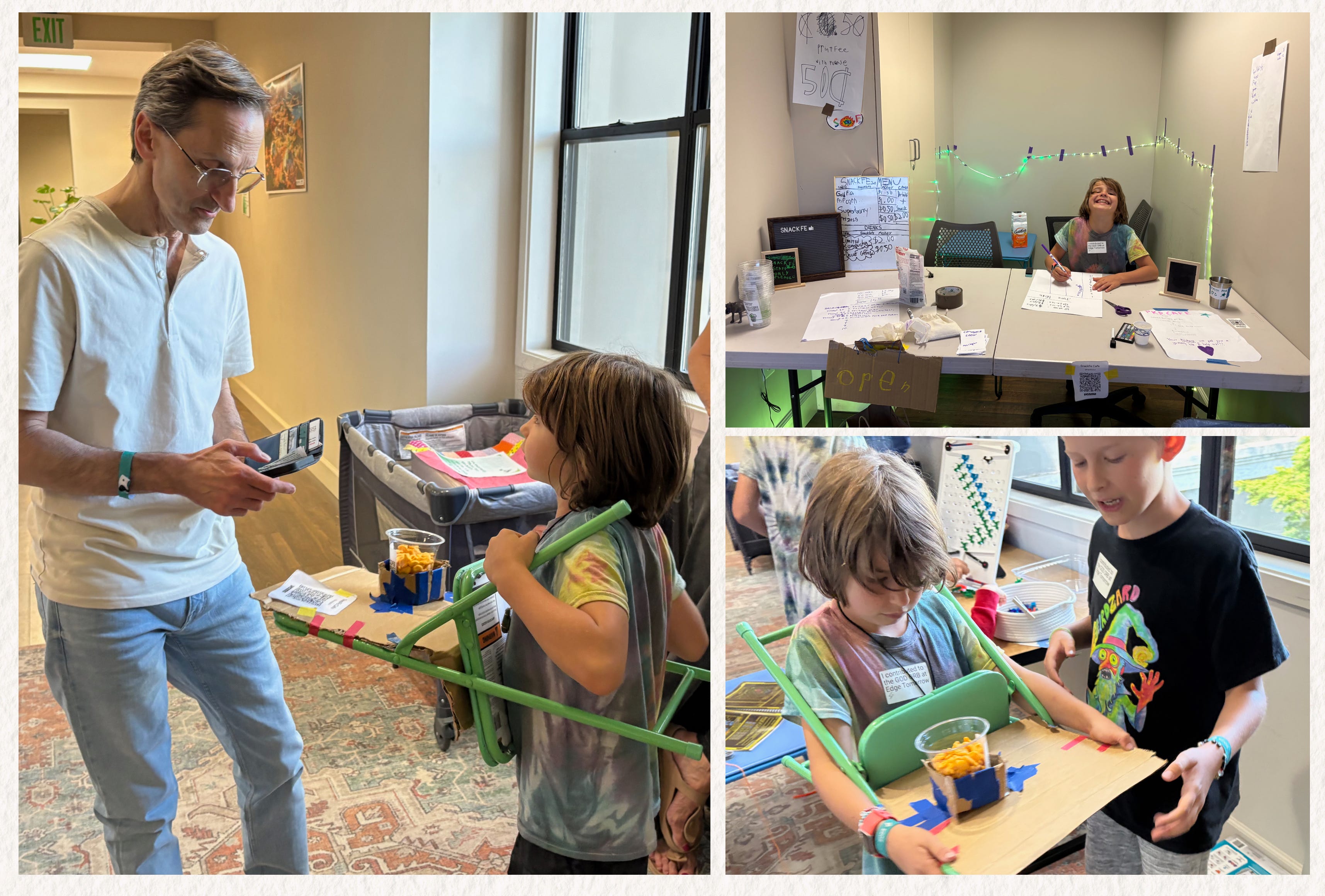
In this city, buildings were built at the speed of thought, and we used such basic materials that kids could see their ideas come into form within minutes. We tried to “go with” every idea, whether it was to start a currency, start a business, or build 20 cardboard Trader Joes.
This established a bias toward action, a model of the world as a plastic place, and an experience of learning from what each creation teaches you.
"The degree of ownership and enthusiasm is absolutely mind-boggling.” - Minal Desai, educator
Antifragility: When you care, you’ll keep at it
The kids faced a ton of difficulty in bringing things into being. We were sometimes worried they would just throw their hands in the air and give up. But every time, they leaned in.
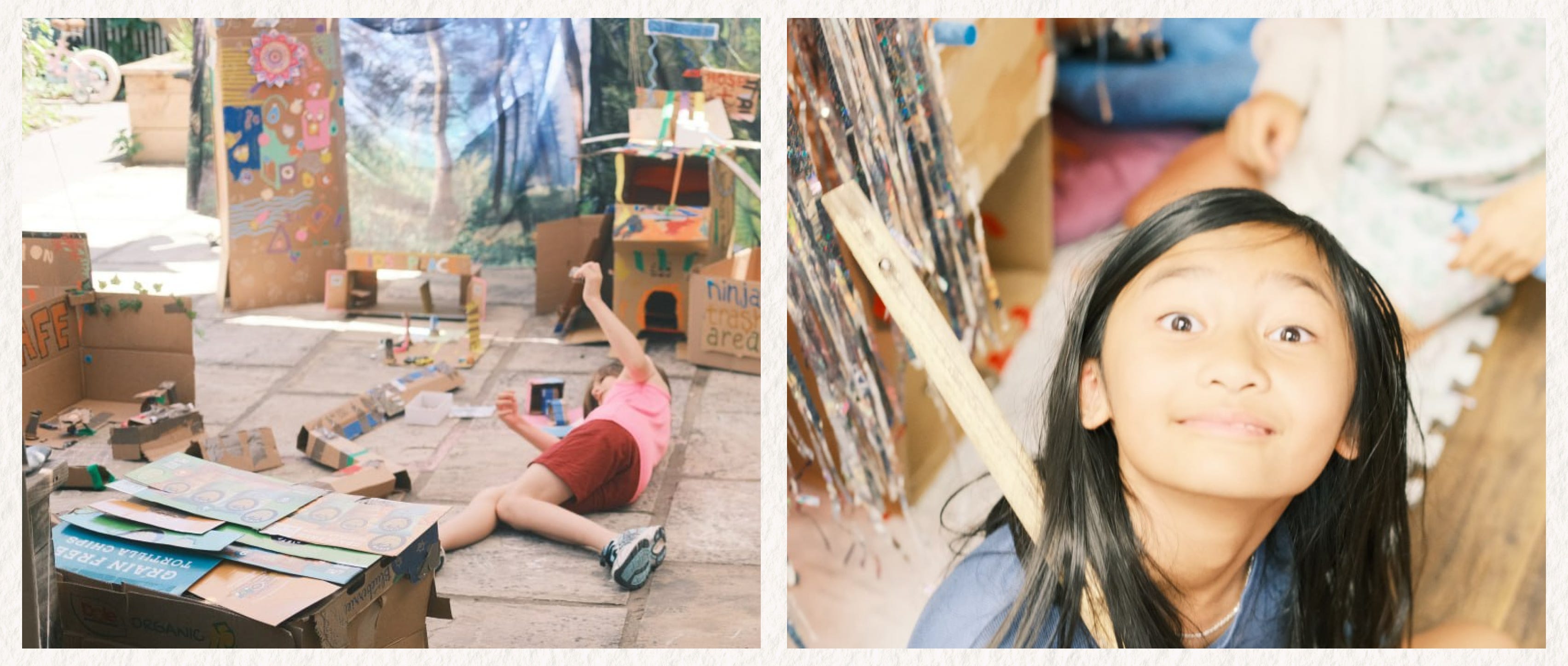
Have you ever tried to translate things in your imagination into structures of cardboard, string, wire and tape? It might sound like a cinch but it’s actually not easy. Walls fall down, yarn gets tangled, screwing thirty cardboard screws up the side of a stiff box can take young hands the better part of two hours. In the middle of the first week a windstorm blew our city down and we had to rebuild and strengthen structures. In the middle of the second week we were displaced and had to colonize a completely new land.
Each stressor gave kids an opportunity to practice antifragility and show care, lean into the materials and learning, and build and rebuild their world and their character.
Systems-thinking: Connect individual creativity to what the world needs
Instead of creating in a vacuum, the city provided a continuous, ever-evolving provocation and inspiration. It wasn’t “What should I make?” (a personal expression question) but rather, “What does the city need?”. A revolutionary and inspiring reframe.
Each individual’s creation became not only their personal masterwork but their answer to the call and their connection to the collective. This resulted in exciting developments like iterations on a village currency and a network of ziplines for public transport in the cardboard city.
Follow the children: Letting go of the adult agenda
The adults who collaborated in sustained and nourishing ways were the ones who could enter the world of children, enable kids’ unique genius to find form, and often help the kids direct their attention to service of the whole.
They were willing to let go of their personal modalities or activities. One volunteer proposed a jam-making activity and even went so far as to get supplies and ingredients, but had the grace to redirect his focus when he noticed the kids interest being elsewhere.
Letting go of our tightly held adult ideas was a beautiful theme across the month.
“Big gratitude to the Edge Tomorrow team - you’ve created such a wonderful and safe environment for all adults and children to be ourselves...and to have fun. I’m loving what we are all creating together with your guidance, encouragement, and friendship.”
- Dawoon Kang, mother of Sanara, 5
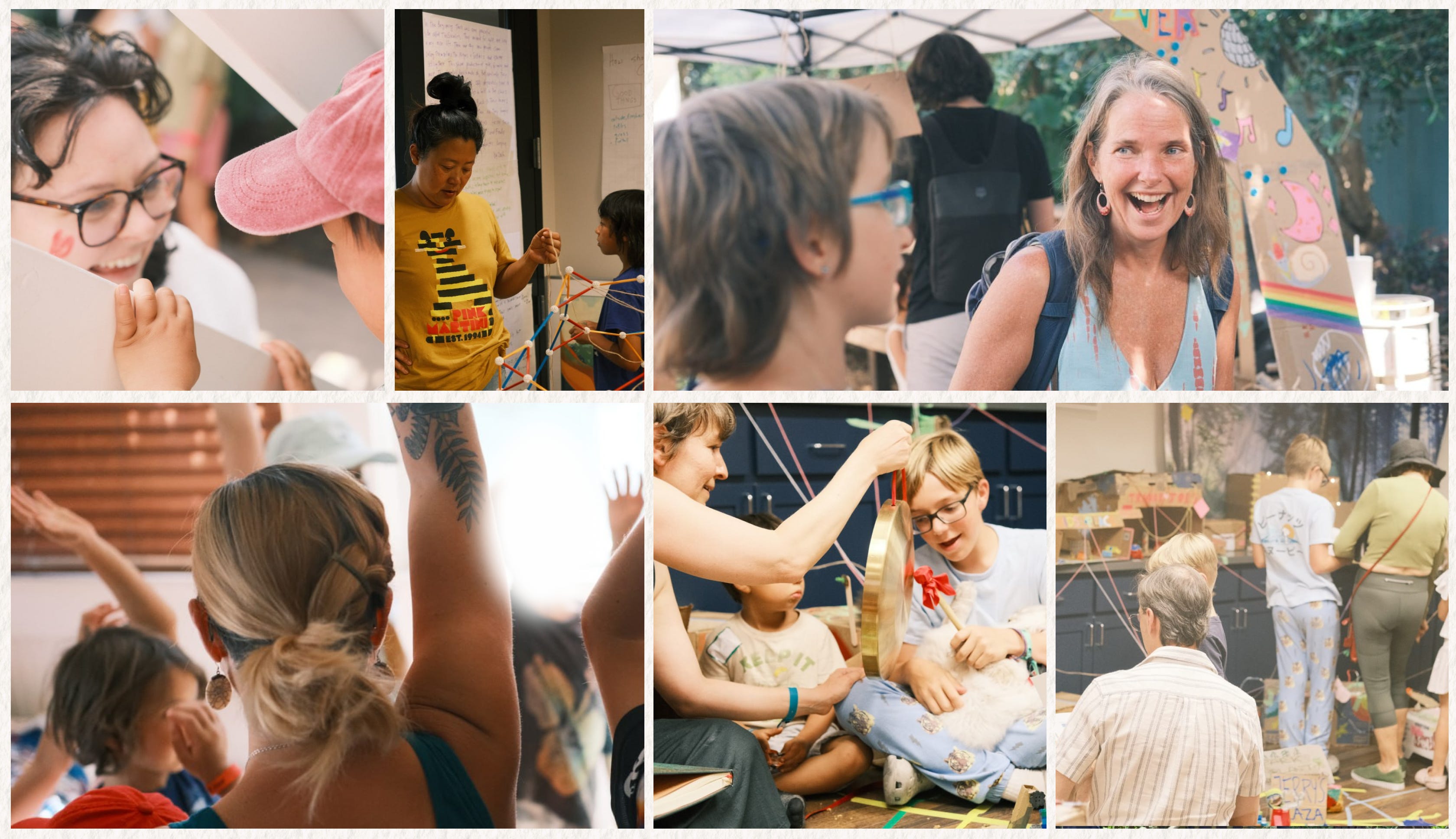
Stories from the Edge Tomorrow families
The Shinn Family: Embedded in the Village
When Jon and Keri arrived at Edge Esmeralda, they hoped their self-directed sons, Leo (8) and Trey (13), would feel at home. The family had been worldschooling for the past decade and ran an Agile Learning Center for several years along the way. As high-agency kids who want a real hand in shaping the contexts they’re part of, the boys had often been disappointed by experiences they felt diminished their capacity, wholeness, and drive to explore.
At Edge, each of them stepped into the life of the village in new ways. Through Edge Tomorrow, Trey led the construction of a giant mathematical sculpture, collaborating with adults and forming friendships with kids as young as four. Leo found his own path through cooking, entrepreneurship, vibecoding, and building projects. Jon and Keri attended expansive sessions in fields entirely new to them, while sharing their village-building, conscious parenting, and relational mastery work with people creating new ways to organize life and culture.
“The whole Edge experience was a stretch — I was learning juggling, learning binary, learning about Turing machines.” — Trey Shinn, 13
Beyond the structured Edge Tomorrow time, the whole family loved the village setup: getting everywhere by onewheel and ebike through a beautiful natural setting, late-night saunas at the hotel (where the boys perfected slipping in and out without losing the heat), and running into Edge folks in the plazas, the healthy restaurants, and on the hikes and in the gorgeous natural spaces they frequented. They shared meals with other families, played volleyball and Assassins, and formed friendships that stretched across generations.
For Keri and Jon, Edge also offered something they’d long been seeking: a pathway forward for their boys that feels fit for the times they’re entering. The kids spent the month surrounded by deeply passionate, creative, high-agency people in their twenties and thirties, tackling some of the world’s most interesting and juicy challenges. A living example of what it can look like to “grow up” with purpose without losing the vitality and magic of youth. They found it so valuable that they brought their older son, Alden, out to join them for the final week.
The Shinns left with a new reference point for how stimulating truly intergenerational village life can be — where each member of the family has meaningful work, genuine friendships, and the space to create — feeling deeply connected to the people and the community, and already dreaming of ways to add even more to Edge City Goa (India).
“I’m keeping my wrist band on until Goa, and I’m going to keep a collection of them from all the Edge City’s I go to.” - Leo Shinn, 8
The Evans Family: This is how we were meant to live
At the last minute, Antony and Jo moved Phoenix, 4, from the nature art day camp, to Edge Tomorrow. Mitra had agreed to try it out, even though she had designed the container for older kids.
Within the first week, not only did Phoenix contribute significantly to the cardboard metropolis the cohort built, he became a leader. In mixed-age circles, he helped shape group agreements and plans, and his older peers treated him with great respect and collegiality.
“I never want to not be here” - Phoenix, 4
At the end of the first week, Edge Tomorrow hosted Phoenix’s little sister Solena’s first birthday party, an emotional moment Phoenix and friends helped plan. By the end of Edge Esmeralda, Antony felt changed and knew they couldn’t go back to their old age-segregated world. He and Jo decided to reshape plans for Phoenix’s summer so they could enjoy more cross-generational creativity together.
The Leger family: This is what it means to fold kids in
This was Janine’s first Edge Esmeralda as a mother, and she was unsure how it would feel to lead while having seven-month-old Piper at her side.
But one day Marianne, Janine’s mom, stopped by Edge Tomorrow with Piper, and she was struck by what was unfolding there. Extroverted Piper was immediately at home! Over the following weeks, Piper and her au pair Liv came to visit with the kids regularly and made friends.
Janine is struck by how different Edge Tomorrow was from regular play groups or day care. Being fully integrated into fun, colorful, multi-age village life is a rare and beautiful core memory for an infant, and she left Healdsburg excited to help more families experience this.
“Edge Tomorrow has been everything we hoped for at Edge Esmeralda and Edge City, and we’re bringing it wherever we go next. Raising curious, kind and independent thinking kids who can help shape a better future has always been part of our vision. Watching my daughter Piper join Edge Tomorrow at seven months old, making friends years older than her (kids and adults), has shown me what it means to fold kids into what we’re building.”
— Janine Leger, co-founder of Edge City and mother of Piper, 7 months

The Kang Family: Taking creative principles back home
Dawoon wasn’t sure Edge Tomorrow would work for her daughter. Sanara, 5, didn’t like to be in the same place from 9am-4pm and hadn’t been to a camp for a long time.
By the end of the first morning of Edge Tomorrow, Sanara was completely engaged. She built a tiny shop of cardboard, and had begun work on a giant, flowered cardboard creation. She called it the “Dream Tree,” and it became a magnetic and mythic center of the cardboard city she built with peers from 4 to 13 and other creative adults during the week.
Dawoon and her sister Arum, who are designing a new Learning Village in Portugal, left inspired to build an “intergenerational hub” for their village using the principles from Edge Tomorrow. Ari, the family’s au pair, left with fresh perspectives on sparking creativity at home.
What’s next?
Coming out of Edge Tomorrow, it’s clear this is the start of something new and significant. Kids were deeply engaged, parents were calm, relaxed and shared profound gratitude. We did what we set out to do, and more.
Families need containers like this, where every member at each age feels seen, met, and supported in bringing their vision to life. We are inspired to grow a network of experiences like this around the world, and prototype the future of intergenerational life.
Over the long term, we’ll be developing a network of living environments where children, parents, elders, artists, entrepreneurs, and researchers learn, create, and contribute together. By combining the intimacy of the village with the stimulation of a creative campus, and the bustling energy and ambition of a city, we’re exploring what family life can become in this unique, potential-filled age.
To Mitra Martin, the Center for Numinous Worldbuilding, every collaborator who joined the kids’ projects, the 22 families who trusted us with their children for a month, and above all to the kids themselves: thank you. Thank you to Sylvia Rayner for capturing the beautiful and sweet moments from Edge Tomorrow shared here.
This summer, we’re working closely with Mitra and the Center to integrate what we learned into Edge Tomorrow 2.0. It will run at Edge City India from Oct 11 to Nov 1 in Goa, India. If you’d like to bring your family, apply at edgecity.live/india26 and add your kids to the application.
"I'm keeping my wrist band on until Goa, and I'm going to keep a collection of them from all the Edge City's I go to." - Leo Shinn, 8
As we take this work forward, we’re excited to join with aligned collaborators and partners to bring Edge Tomorrow to more families. To connect about Edge Tomorrow opportunities, please reach out to Mitra at mitra.martin@gmail.com.
- The Edge City Team ☀️