

Introducing the 2026 Zee Prime Residents
Meet this year's Zee Prime Residency cohort: deep tech founders stress-testing what they're building with real users, real feedback, and real peers.
June 7, 2026
Zee Prime Capital is a venture fund with no rules, backing frontier work that shifts the moving overton window toward the world's brightest new ideas. This year they've teamed up with Edge City to host the Zee Prime Residency at Edge Esmeralda in Healdsburg, CA.
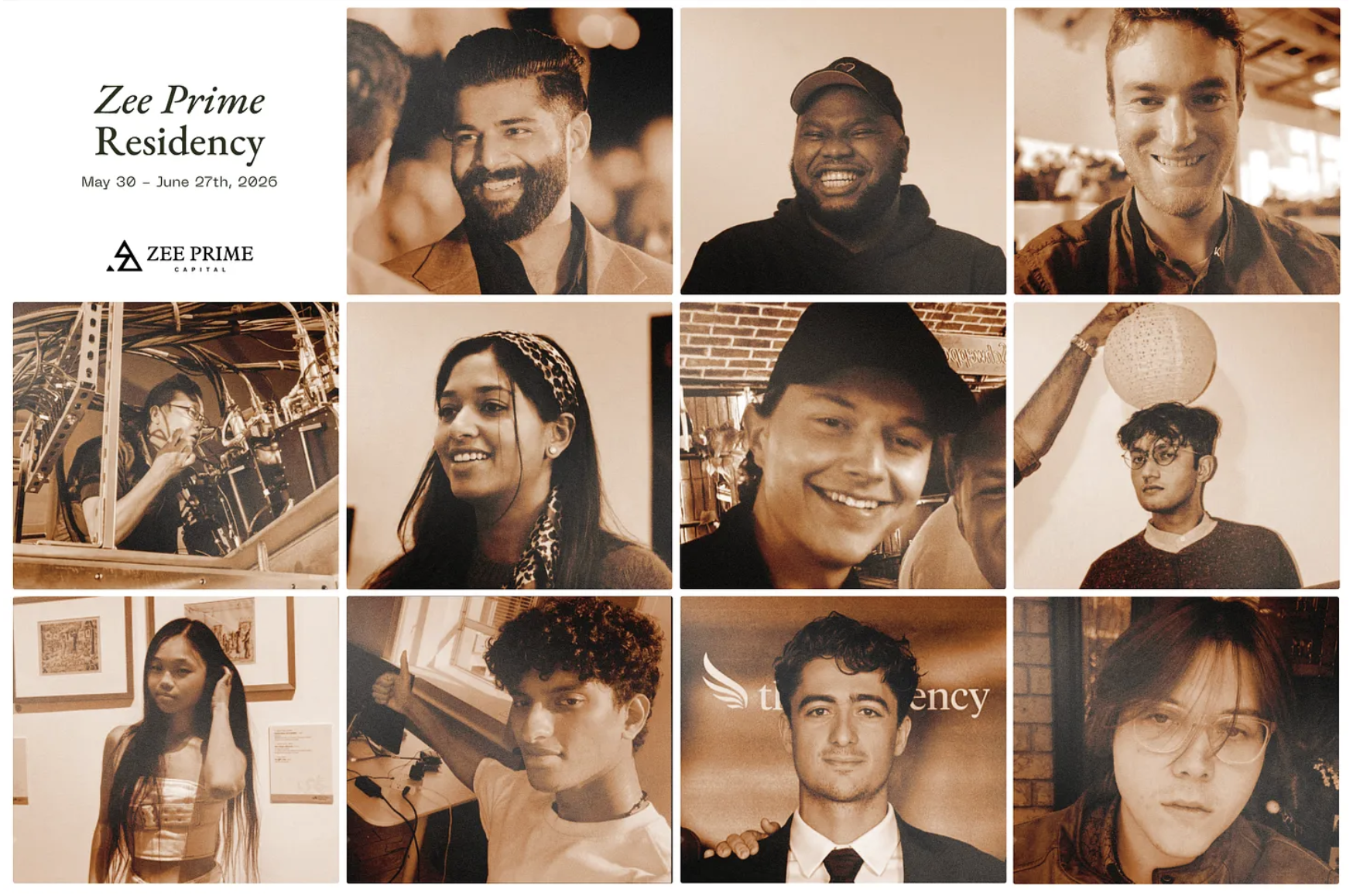
Take eleven deep tech founders who need real users and honest technical feedback, drop them inside a month-long village full of the people who can give it, and let four weeks of proximity - kitchen-table conversations, unprompted intros, and quiet collisions - do the rest.
This is the Zee Prime Residency at Edge Esmeralda, in partnership with Zee Prime Capital. From May 30 to June 27, these eleven founders will be living and working together on autonomous AI agents that earn their own keep, real-time biomarker prediction from your phone, a command interface for cognitive warfare, and more.
Meet the Zee Prime Residency cohort.
Cooper Wrenn

Cooper is building Instaclaw: a one-click deploy of an AI agent on its own VM, with a full browser, shell, persistent memory, and 20+ skills. It’s live with paying users on Base. One user’s agent earned $8K in a week of autonomous trading, and another placed second in a Virtuals trading competition. Instaclaw has partnerships with World Foundation, Virtuals Protocol, Bankr, XMTP, and Edge City.
Cooper is a solo founder. He dropped out of college three years ago and spent two months of 16-hour days building Instaclaw alone, “with AI as my co-pilot.” Before that, he built Yours Truly: robots in an Arizona warehouse that handwrite personalised postcards in real ink. Yours Truly is now becoming a skill inside Instaclaw agents.
Ayoola Oluwanusin

Ayoola is building machine intelligence for energy grid orchestration: software for the coordination layer inside grid operators, selling into utilities, governments, and regulated buyers.
He grew up in Lagos studying by kerosene lamp while his family queued for diesel. He worked as an engineer at Google Cloud, UBS, and Bloomberg, then quit in late 2025 and spent six months on the road across six countries: battery farms, solar plants, data centres, grid operators, policy people. He also started a farm in Nigeria (cassava, cocoa, chickens, fish, pigs) because, as he puts it, “you can’t theorise your way out of hunger.”
Yustynn Panicker

Yustynn is building Cassandra, a credibility layer for the public internet. It extracts and pre-registers predictions from influencers, scores them on accuracy, and sells the data plus a browser overlay. Cassandra is starting with Crypto Twitter.
He was the first engineer at a synthetic data startup where he built a 2D compositing engine for visual synthetic data . Overly concerned with rhetoric creeping into logic, he overengineered an interactive essay arguing that rhetoric and logic should be decoupled, which topped r/philosophy for a few days before being taken down for "self-promotion". He's still mad about that.
Eric Lacosse
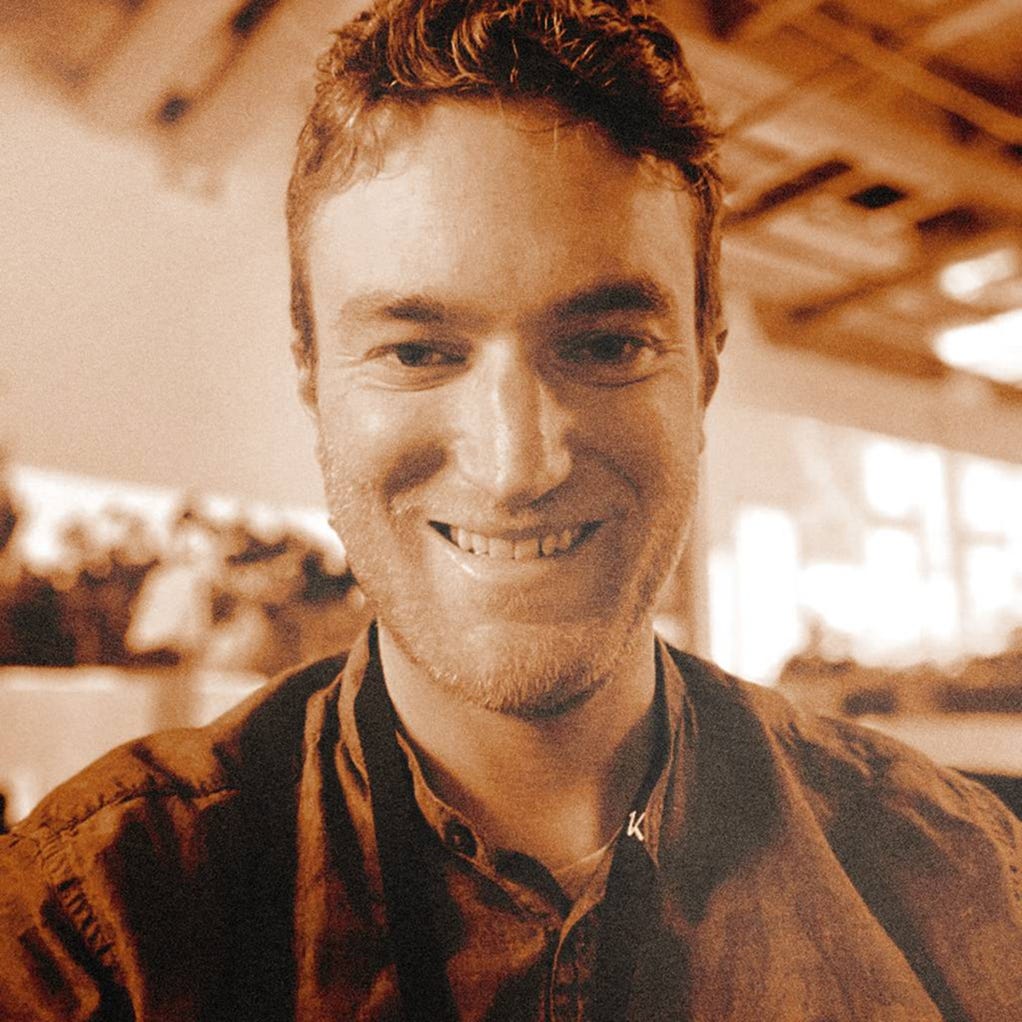
Eric is building cognitive prostheses, BCIs that operate in the space of thought to help restore and augment cognitive function in humans. He is a researcher engineering solutions for humans to better interact with, control, and understand AI systems, a field he calls cognitive human-AI engineering.
His background is computational neuroscience where he finished a PhD at the Max Planck Institutes and has worked across BCIs, ML consultancy, and academia. He sees the confluence of art, science, and technology as the philosophical laboratory to decode, expand, and enrich human experience, provoking ontological questions about what it means to be human in the age of AI. He is currently transitioning from academic research to founding his own organization focused on tech.
Dennis Ren
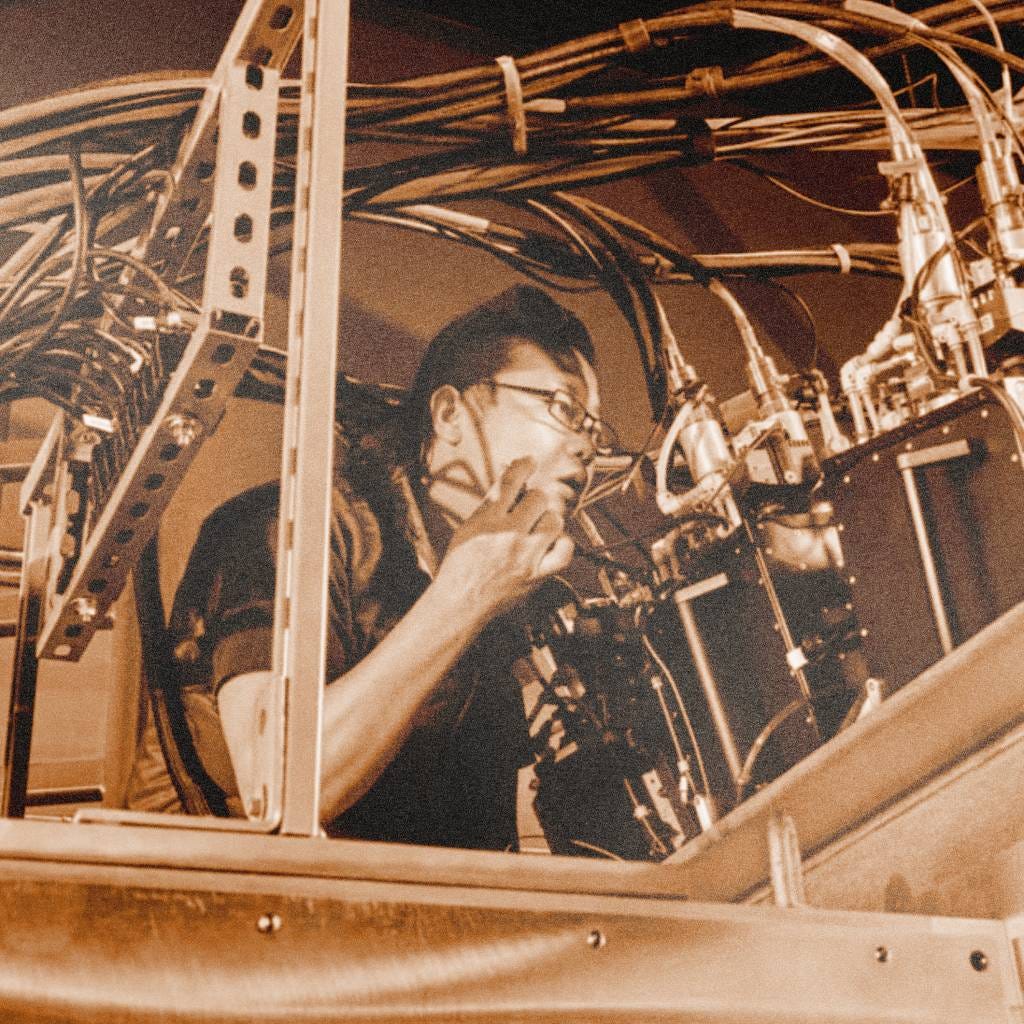
Dennis is building a power utility in space: power-as-a-service for commercial satellites via microwave power beaming. The window for stewarding orbital real estate is closing before congestion makes the best orbits unusable.
He's been hardware-obsessed since childhood, building Tesla coils and rail guns in high school. He brokered a Virgin Galactic future-astronaut to fund a named scholarship at his university (and then ran it), and once flipped four rental properties on a single paycheck during the COVID lockdown. He describes his superpower simply: "Building hardware. I am one of the best in the world."
Aditya Lalchandani

Aditya is building Prana: drug-assisted enhancement protocols to make people superhuman, starting with muscle gain and fat loss. Their protocols pair enhancement drugs used by elite athletes (Testosterone, GLP-1s, peptides) with physiological prediction models that map how your body is changing in real time. The first shipped model, MUSCLE-1, quantifies exactly how much training each muscle needs to produce a growth stimulus, with more in development across metabolic rate, muscle mass, and fat mass prediction. His goal is to make everyone, including your grandmother, superhuman with advanced medicine. At Edge Esmeralda, he’ll be running an experiment to model participants’ physiology and quantify how their bodies respond to training, nutrition, and drug protocols.
He grew up in Indonesia, where he turned his bedroom into a biohacking lab at 14: extended ice baths, transdermal drug formulations, 100+ supplement stacks. By 17, he was coaching CEOs and executives at Google, Goldman Sachs, and the World Bank on health and performance. He studied pharmaceutical sciences at UCI, then engineered cancer cell therapies at Arsenal Bio. He also occasionally writes about enhancement protocols and his own experiments on X.
Kimberly Adams
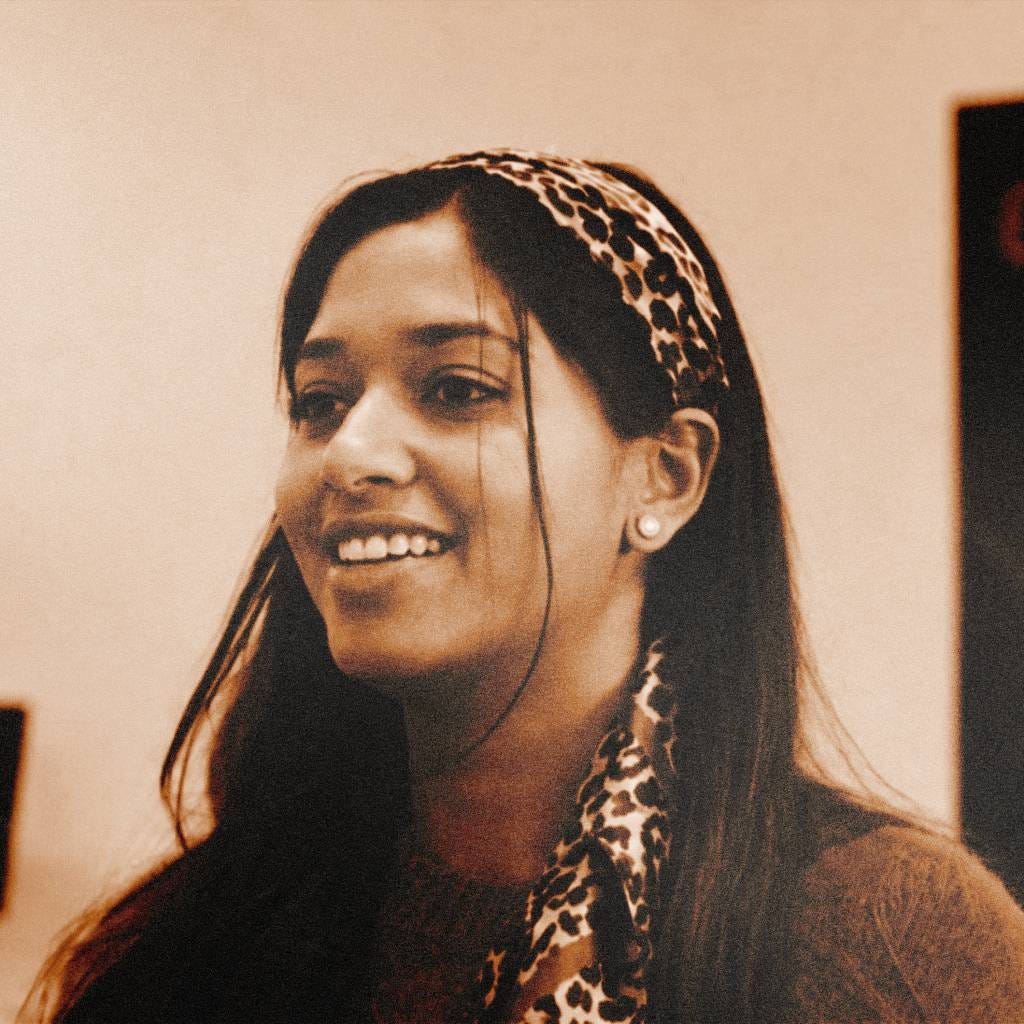
Kimberly is building Naytive (previously Onchain City): an AI and cryptography layer to streamline immigration, banking, tax, and compliance for cross-border living. “The thing I wished I had.”
She started university at 16 while still in high school. After recreating Facebook for class via YouTube, she left and went straight to work at 17 at the first crypto exchange in the Caribbean. She co-authored the Uniswap Bridge Assessment Framework, used across the crypto industry. At 23, before ChatGPT, she wrote the proposal to establish the first Barbados embassy in the UAE, which has since generated $300M+ in economic activity for the island.
Carson Andrew Martin Lorenz-Stewart

Carson is building Seithar: a unified platform for cognitive warfare operations. It’s software for operators to plan, execute, and measure influence campaigns against human populations or AI agent systems, covering both defense and offense with a simulation layer for wargaming before going live.
The project started as an Alternate Reality Game: a fictional shadowy corporation Carson built using hyperstition and egregore creation. He realised the same methods could be made near-autonomous with the right tooling. As a software engineer who self-studied comparative mythology, theology, and the history of philosophy, he’s designed and run multiple distributed-narrative ARGs that pulled 200+ people into a constructed reality. He’s also ranked top 5% globally in Counter-Strike and top 50 in Competitive Pokémon.
Samantha Ouyang

Samantha is building Elsewhere: an AI coordination layer to help engineer serendipity in physical spaces, starting with late-night coworking cafés in San Francisco. Today, the online world is incredibly optimized for discovery and recommendations, but the physical world is still largely operating blind. You can be sitting two metres away from someone who could solve the exact problem you’re stuck on and never know it. The software is an intelligence stack that knows who’s in the room, what each member is building, and what they’re stuck on, and actively surfaces relevant people inside physical environments instead of leaving it up to chance. The launch drew 700+ waitlist signups in 3 days and 400+ people on launch day, all organic. In matched experiments, participants formed 3.25× more new connections and were 2× more likely to meet someone useful.
At 16, she got funding for her first climate x deeptech venture, scaled a non-profit to 84+ countries, and worked as a developer for the team behind the first public blockchain in China. She un-dropped out of UPenn’s M&T program (Wharton + Materials Science), spent six years in crypto, was on Canada’s 2022 International Chemistry Olympiad team, and was named to lists such as Future 25 Under 25. At 20, she traveled the world solo, built a cryptography platform for SA survivors, and helped scale an AI robotics company to a $20M Series A as founding growth, before ultimately leaving to start Elsewhere.
Arthur Garzon

Arthur is building Yavin Systems: autonomous drones that inventory forests. Timber companies still send foresters into the field with clipboards and diameter tape, a method unchanged in 50 years that costs millions per inventory cycle. Yavin flies in with LiDAR and proprietary ML models to produce tree-level data (species, height, volume, health) at a fraction of the cost and time. Forestry is the wedge into a larger vision: autonomous aerial intelligence for any terrain without infrastructure.
He has a mechanical engineering degree, an internship writing autonomous navigation pipelines for defense systems, and 28 drones built over three years with no formal training in avionics, controls, or embedded systems. As he puts it, every wall he hit was a gap in his knowledge to close rather than a reason to stop. As a teenager he decided he didn’t like who he was becoming and reverse-engineered himself, designing systems for how he slept, learned, worked, and spent attention, then running them like an experiment until they worked. He’s also the 2016 Bay Area Latke Cooking Champion.
Deon Menezes
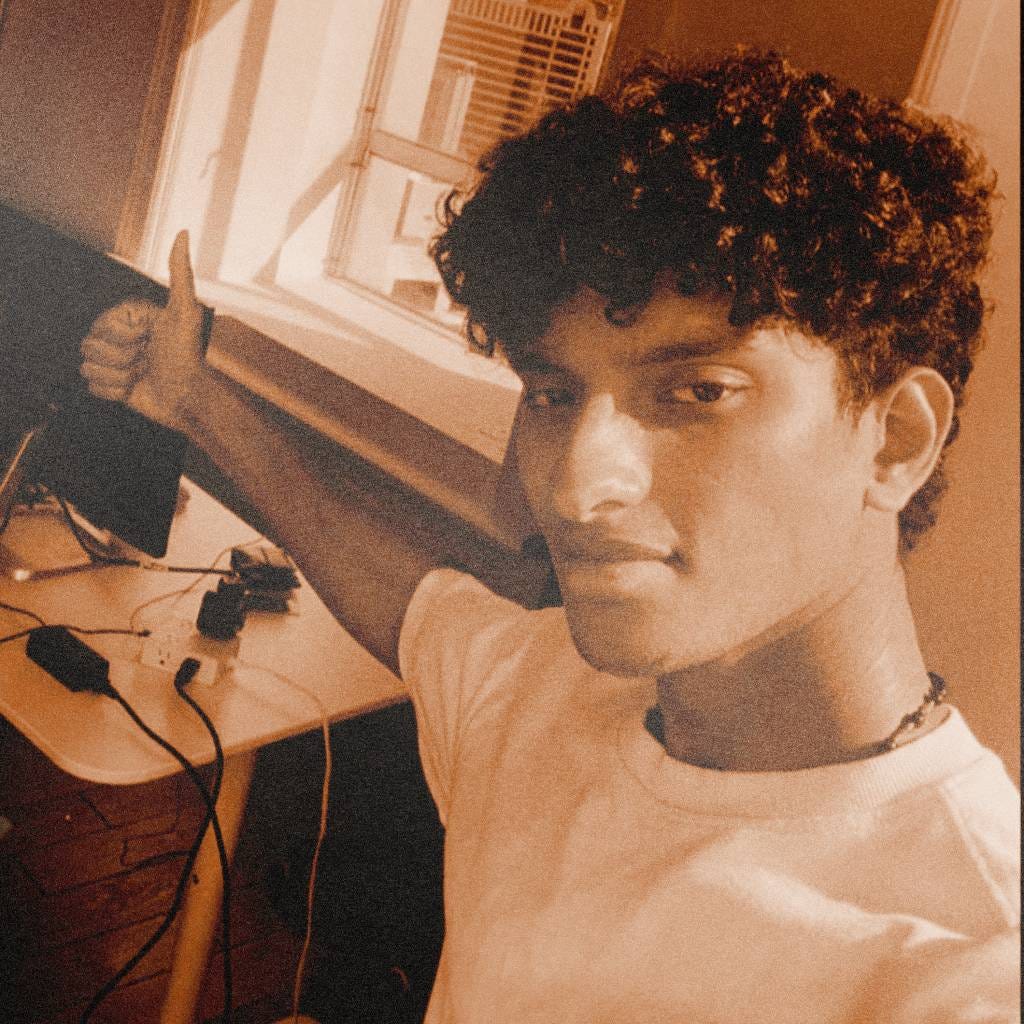
Deon Menezes is a fast-moving founder and constant builder with 14+ hackathon wins, 26K+ Instagram followers, and a growing community of 3,000+ builders and hackers. He has launched companies across three countries (India Dubai and USA) and built multiple products across AI, consumer tech, Web 3.0and cybersecurity.
He is now building MantisHack, a one-click cybersecurity platform that helps secure websites, APIs, AI agents, and Web3 apps. With 3,000+ people on the waitlist, MantisHack is quickly becoming a security layer for the new internet.
A lot of what makes a month like this work happens off the schedule: the late-night kitchen conversations, the unprompted intros, the moment someone leans over and says, “I’ve been stuck on this for six weeks.”
But the cohort is also bringing a lot of its own programming. Ayoola is cooking weekly cohort dinners, Dennis is DJing for the village, Eric is running a contemplative-practice workshop, Kimberly is hosting a session on simplifying complex systems, Cooper is running a live agents-in-production demo, and Carson is giving a talk on the history and philosophy of belief propagation.
We’ll be sharing more as the month unfolds. Follow along on X at @JoinEdgeCity and @ZeePrimeCap.
— The Edge Esmeralda Team ☀️